


One of the definitive soundtrack releases for Neon Genesis Evangelion, S² Works is a comprehensive seven-disc collection of music by Shirō Sagisu, presented as an individually numbered limited edition complete with exclusive physical extras.
Release Date
4 December 1998
Format
7 CDs, booklet, telephone card, outer box
Region
Japan
Publisher / Label
King Records / Starchild
Catalogue Number
KICA-421~426 + SSX-10025
Edition / Version
First Japanese limited edition
Composer
Shirō Sagisu
Significance
The most comprehensive physical collection of music from the original Neon Genesis Evangelion television series and films.
Summary
Released in December 1998, Neon Genesis Evangelion: S² Works was produced by King Records as an archival soundtrack collection celebrating the music of the original Neon Genesis Evangelion television series together with Evangelion: Death and Rebirth and The End of Evangelion.
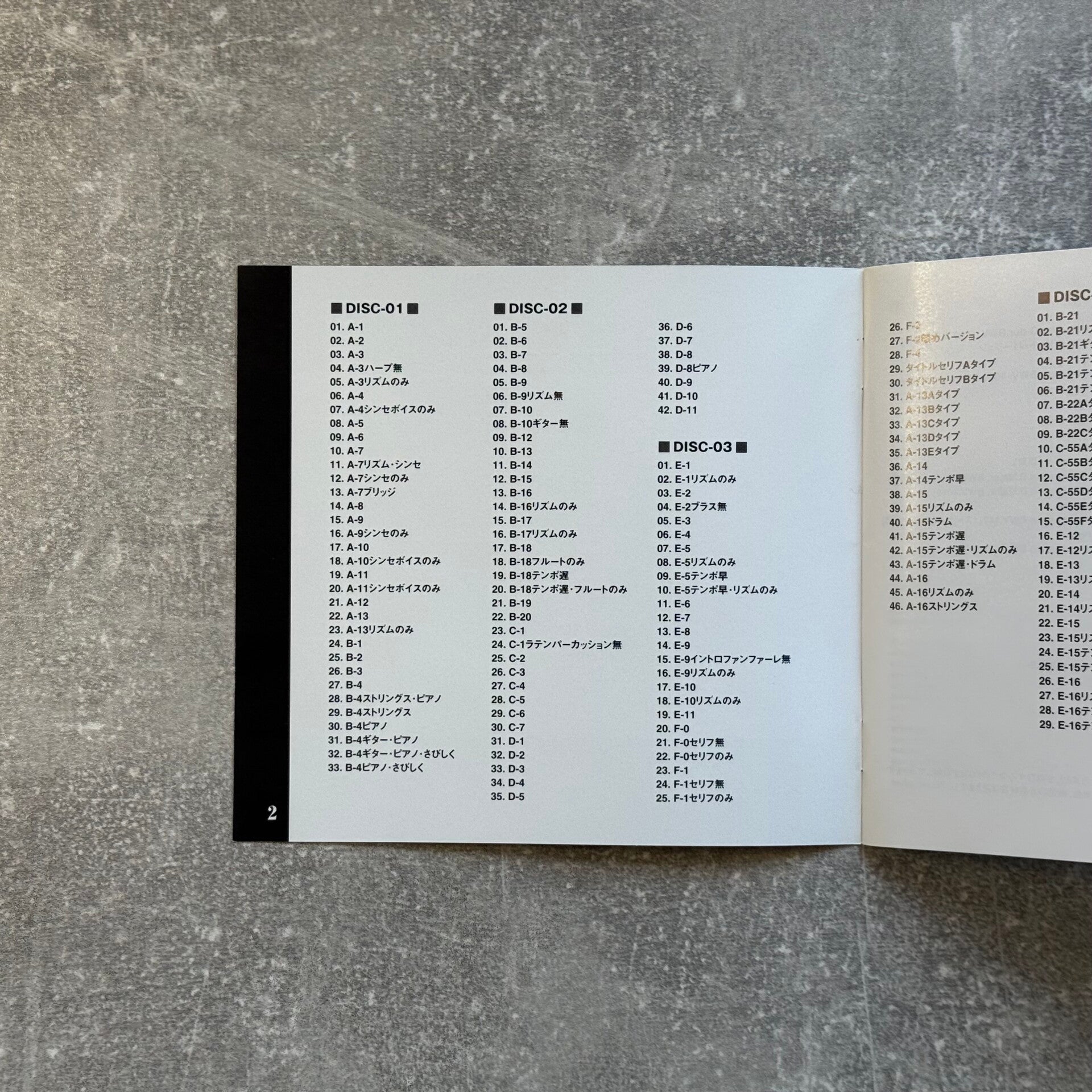
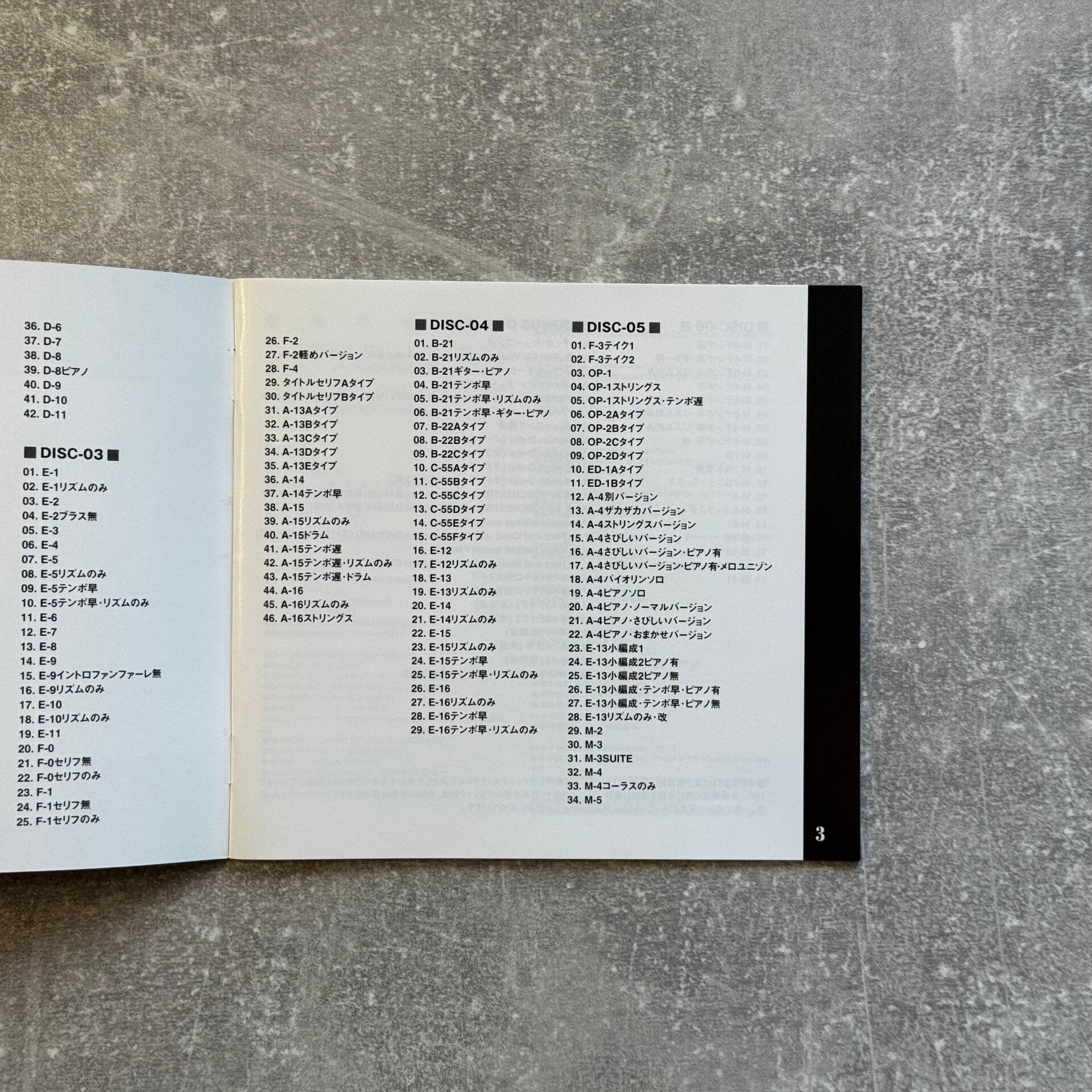
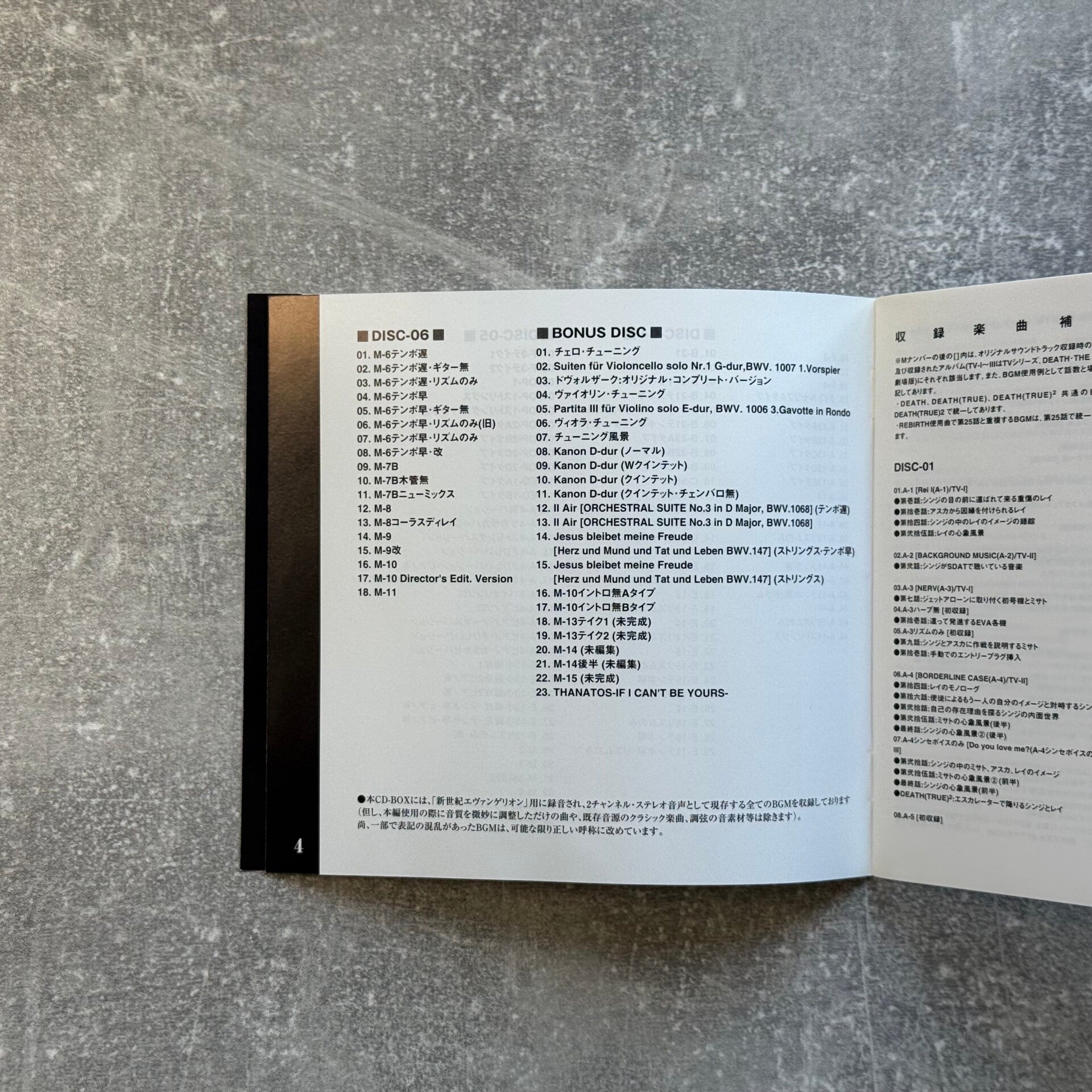
Unlike the earlier soundtrack albums, S² Works was designed as a comprehensive archive rather than a conventional soundtrack. Across seven CDs it brings together over 220 tracks, including complete background music, alternate arrangements, production versions, previously unreleased material and numerous variations that had never appeared on the standard albums.
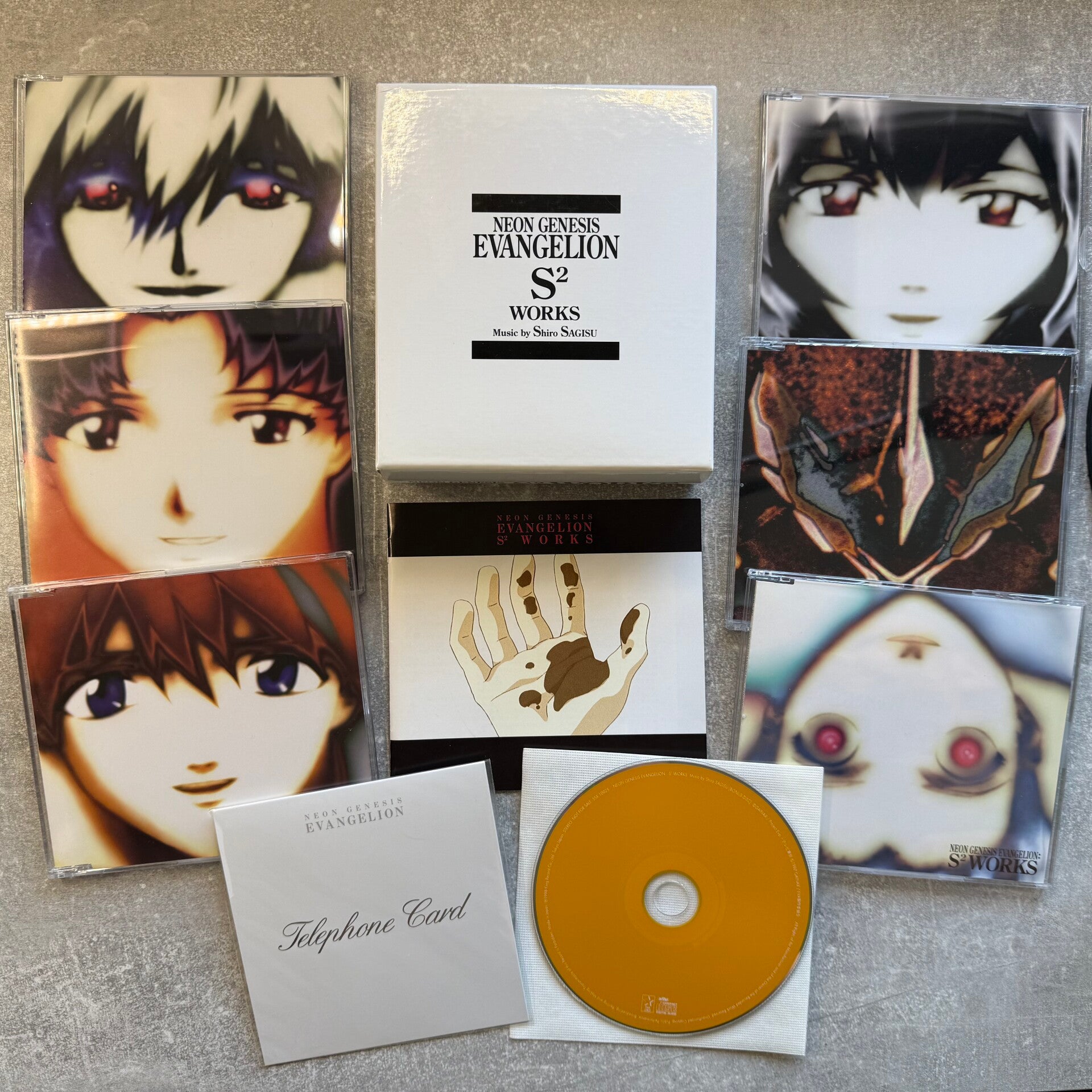
The set was presented as a premium collector’s release. Each copy was individually numbered and packaged inside a large white slipcase containing six standard soundtrack CDs, a seventh bonus disc, a substantial booklet and an exclusive Evangelion telephone card. Even today it remains one of the most desirable physical soundtrack releases produced for the franchise.


Release & Version Details
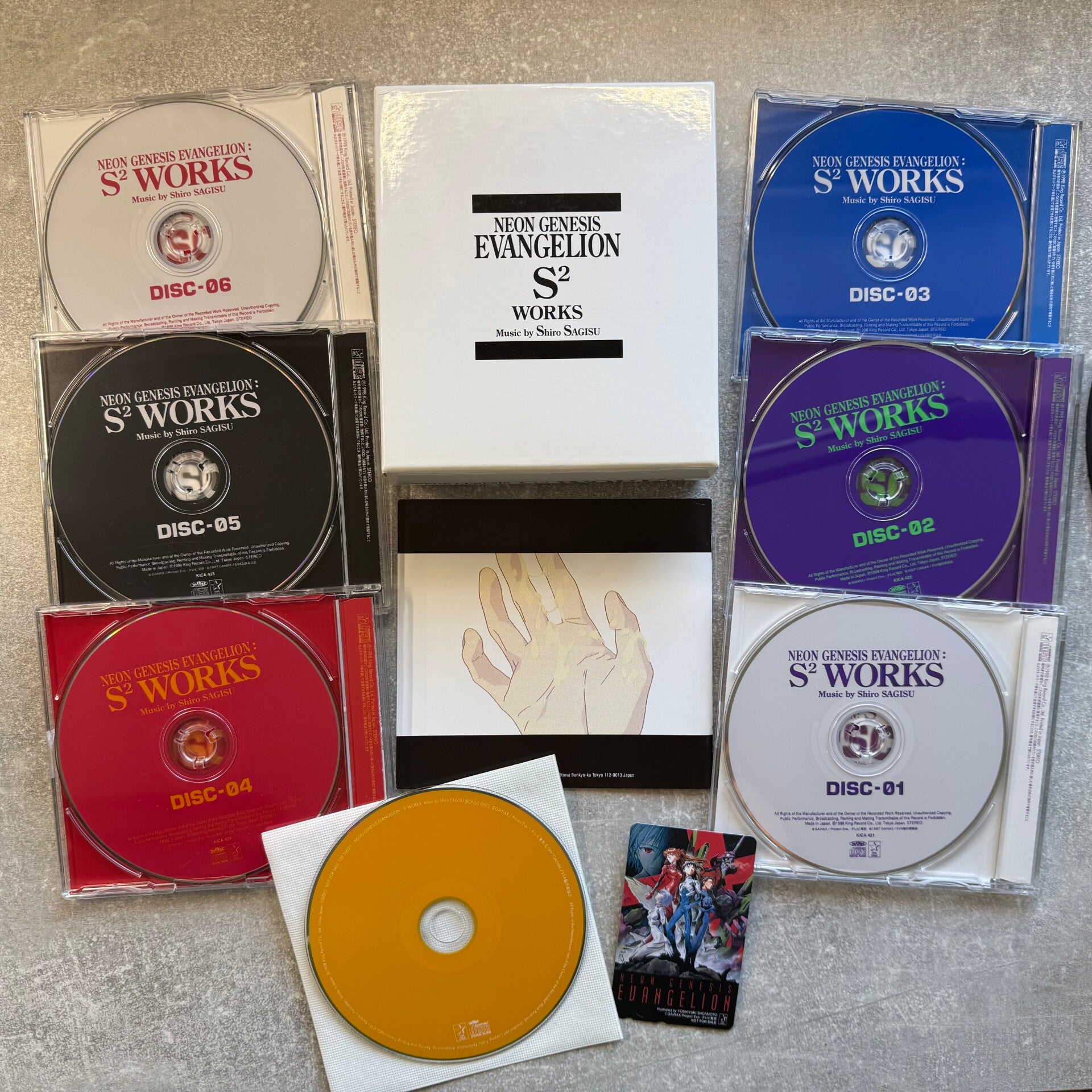
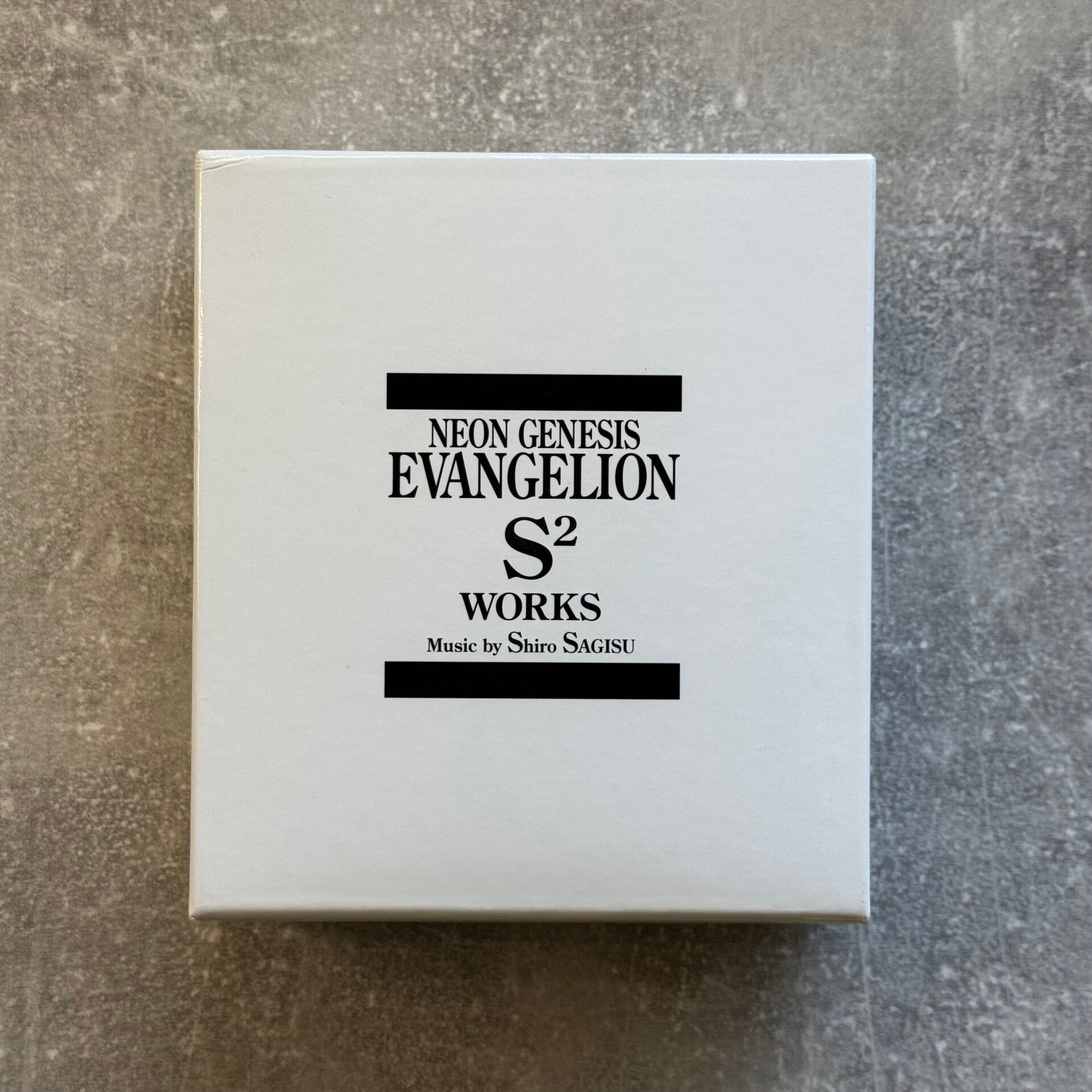
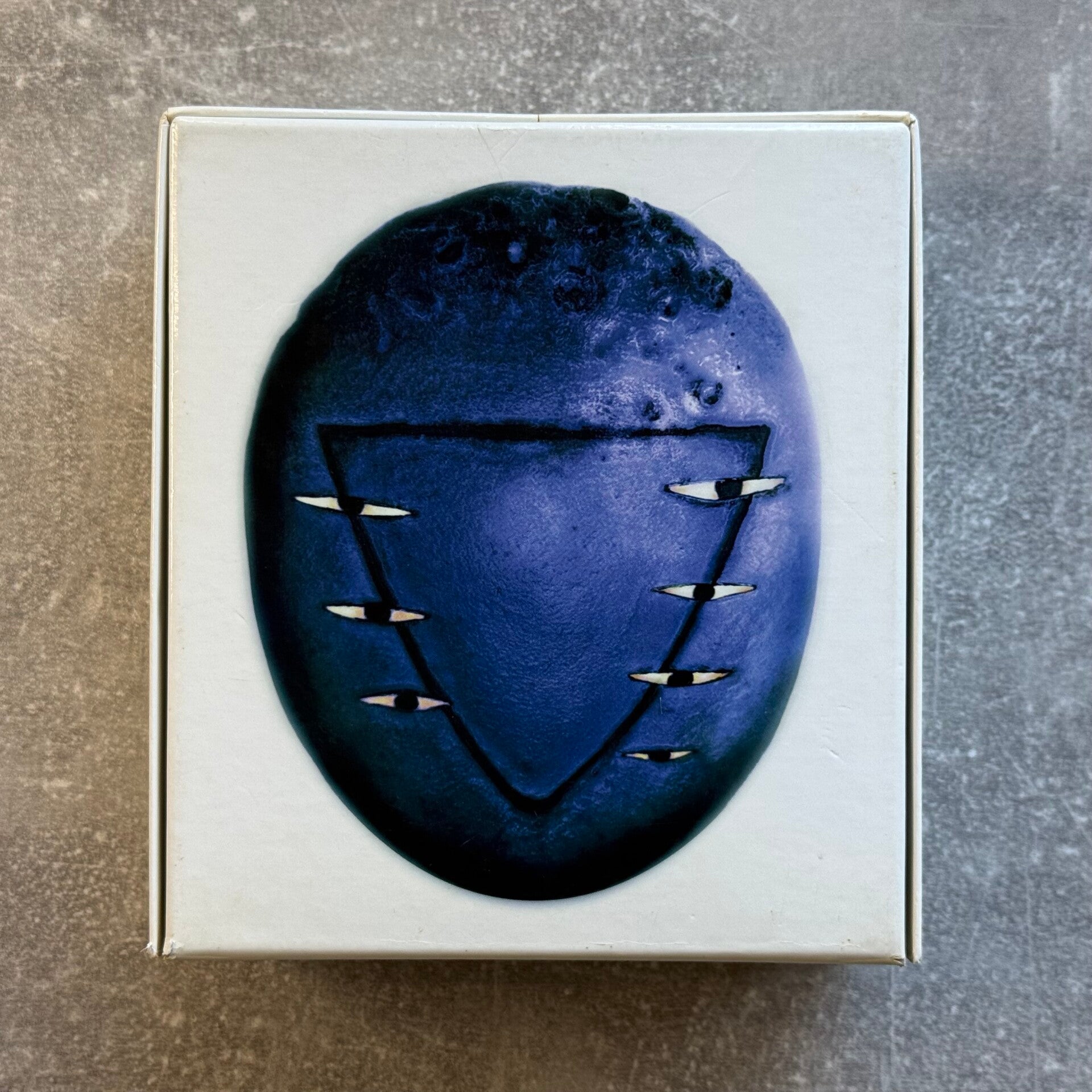
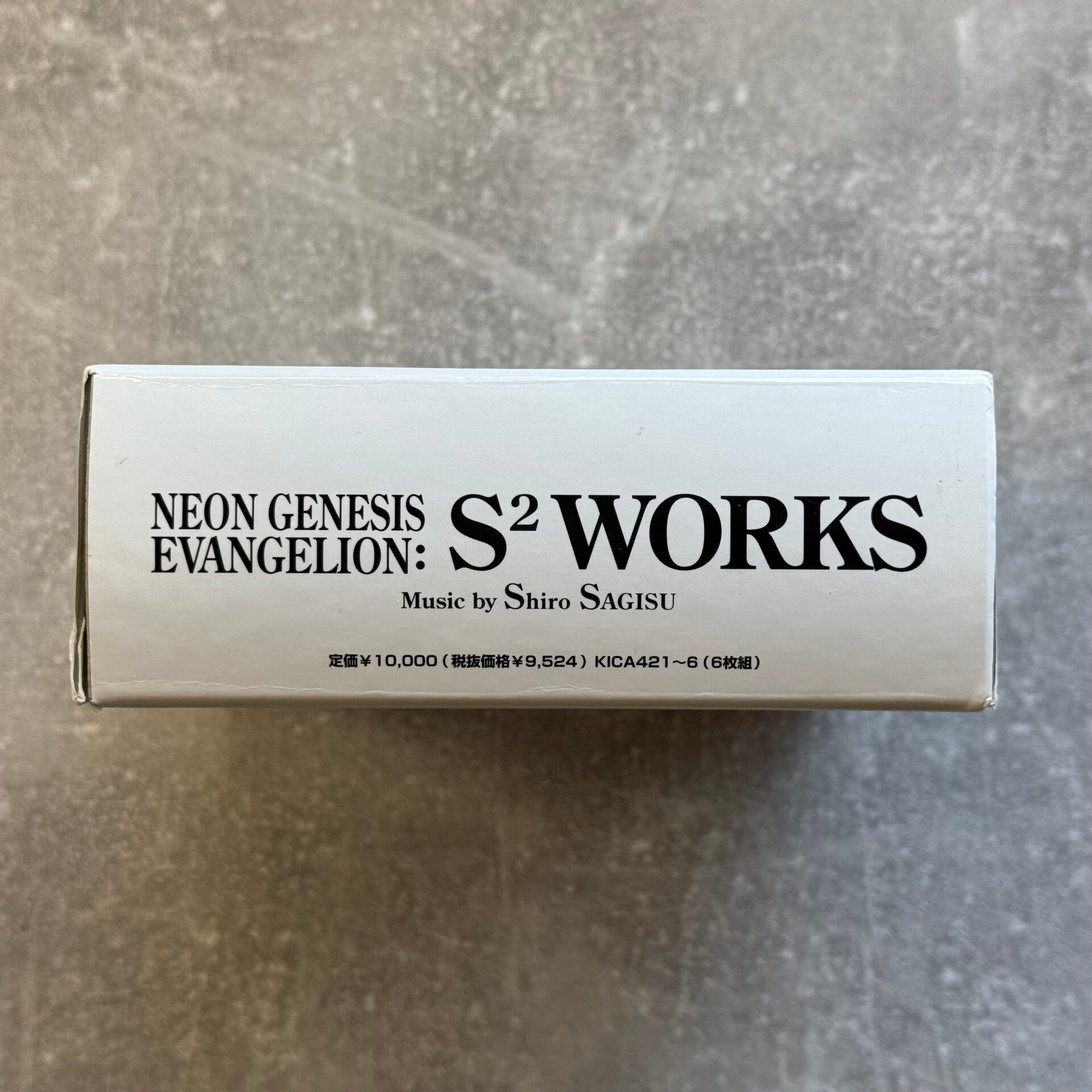
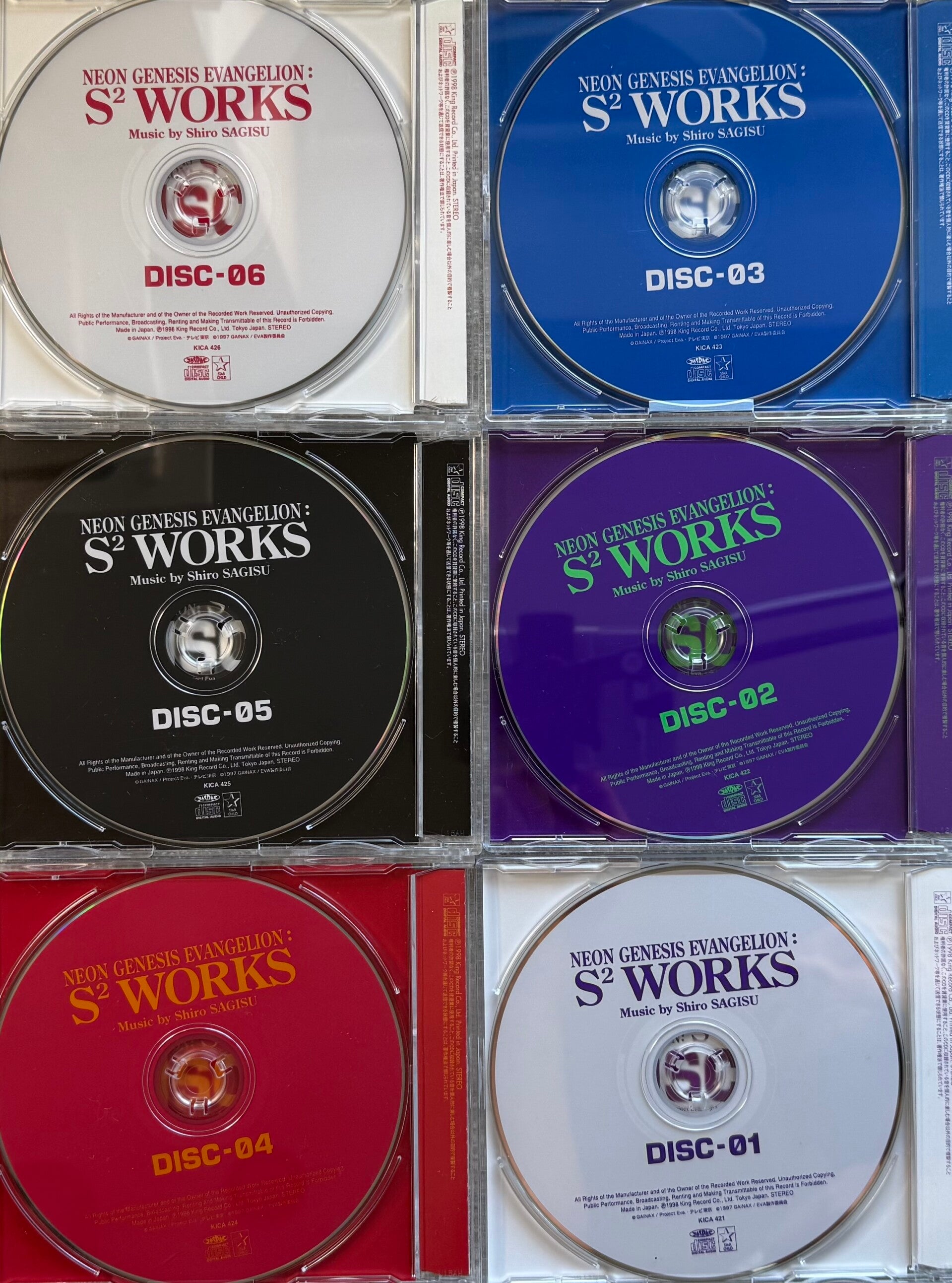
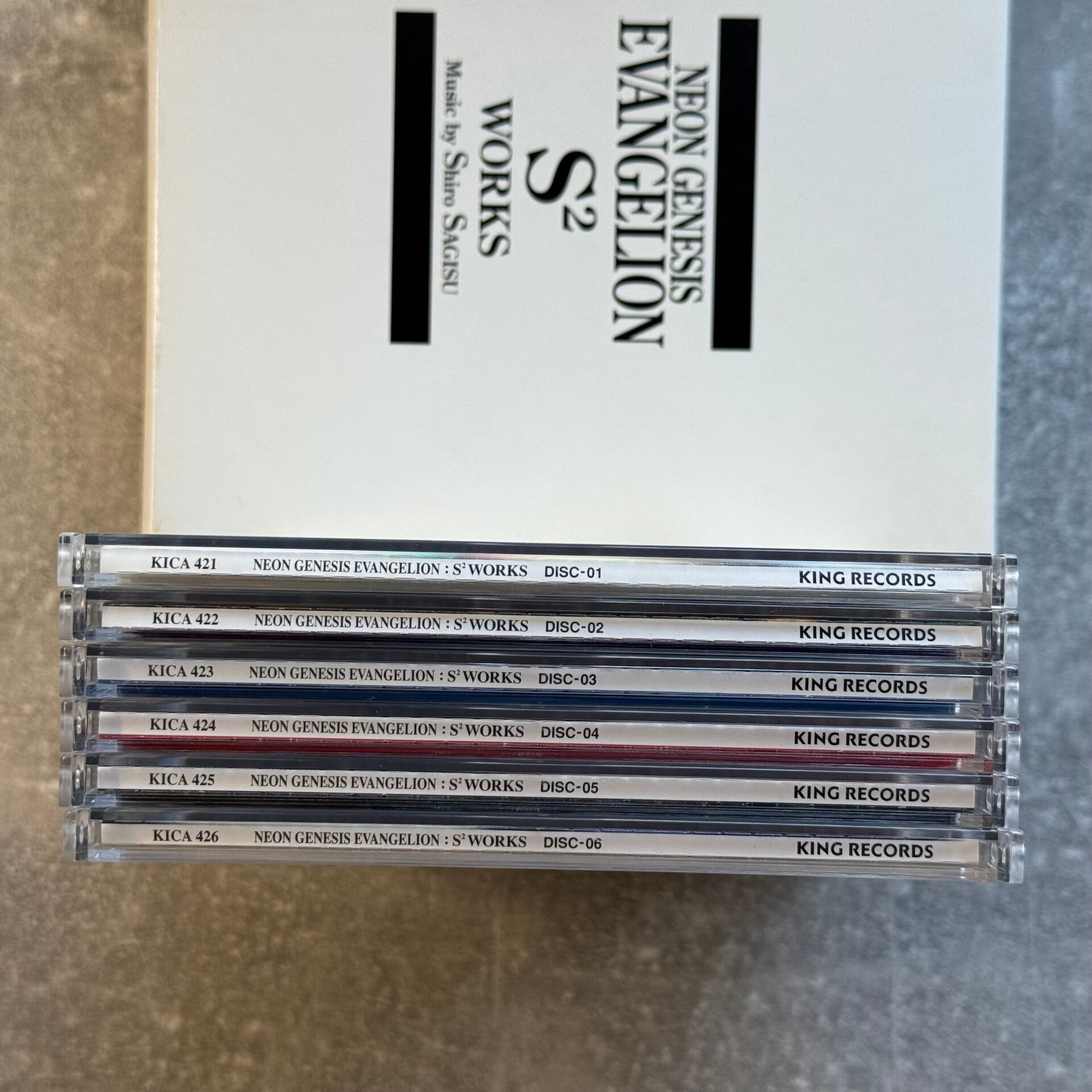
The original Japanese edition consists of six numbered soundtrack CDs (catalogue numbers KICA-421 to KICA-426) together with a separately catalogued bonus disc (SSX-10025). Every component is housed inside a rigid white outer box bearing the minimalist S² Works logo.
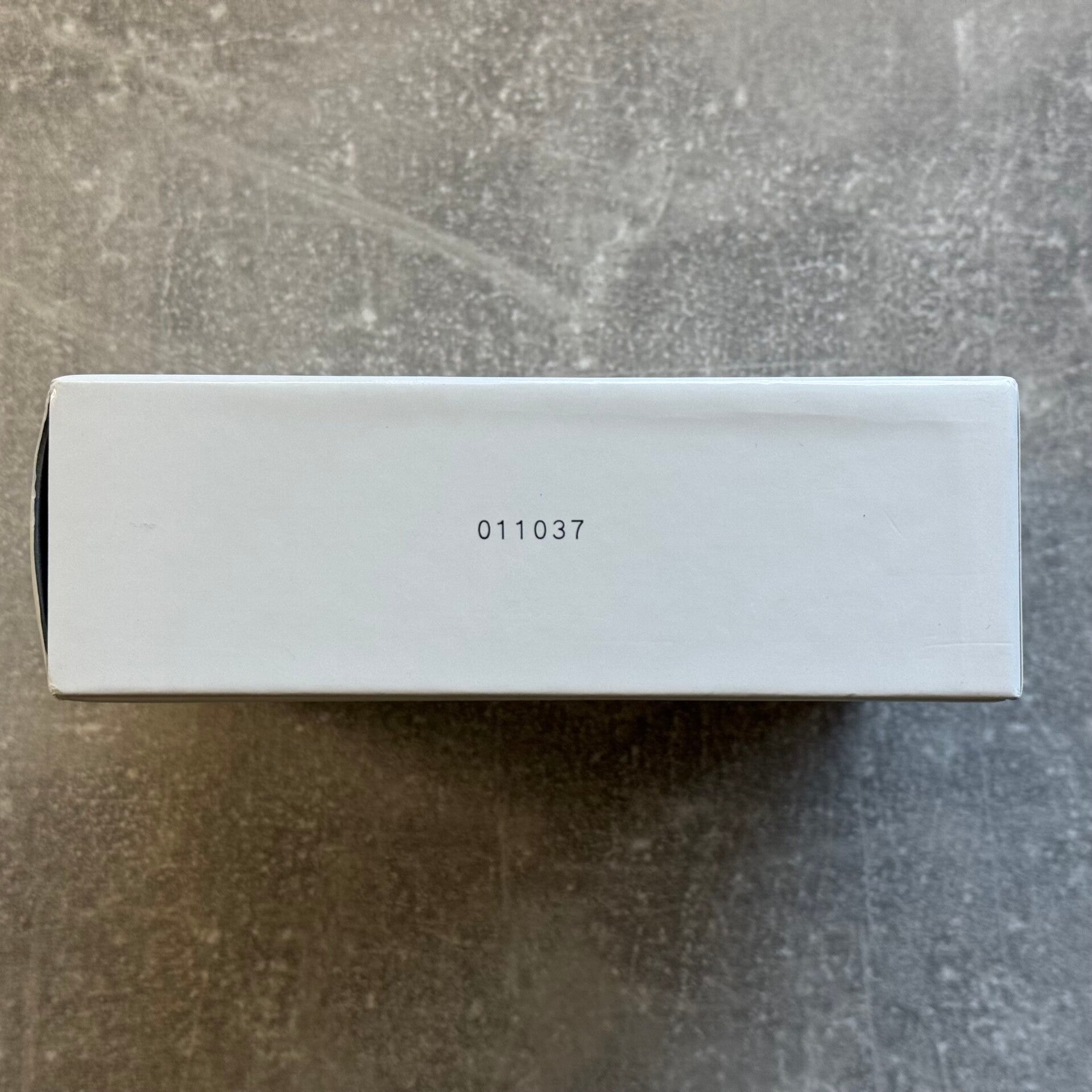
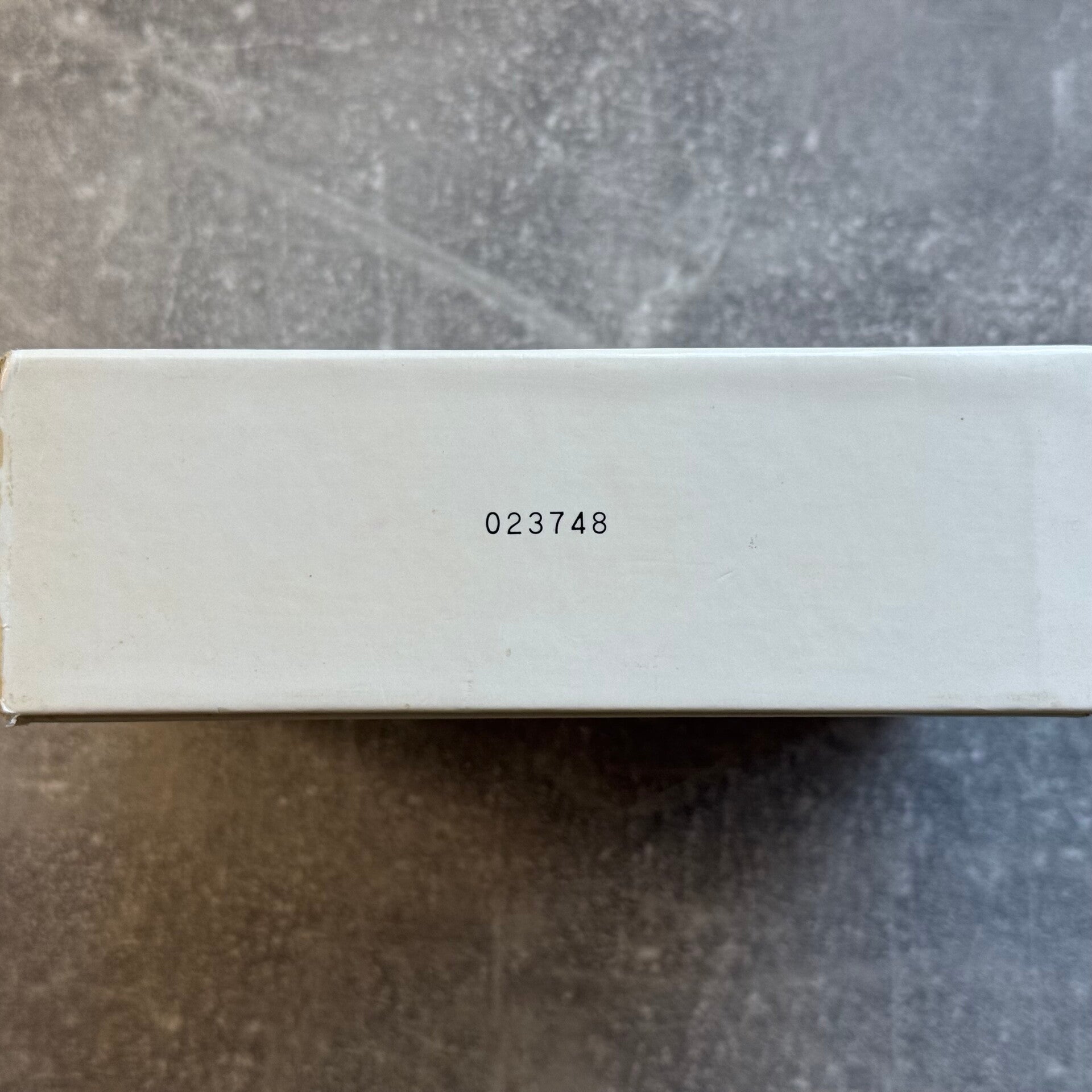
A distinctive feature of the release is that every box was individually serial numbered, making each copy unique. While some secondary sources have claimed a production run of 10,000 copies, surviving examples—including multiple copies documented by the Snows Mini Preservation Project with serial numbers exceeding 20,000—demonstrate that the numbering continued far beyond this figure. Contemporary Japanese collector sources instead describe the release as a 100,000-copy limited edition, which is consistent with documented serial numbers.
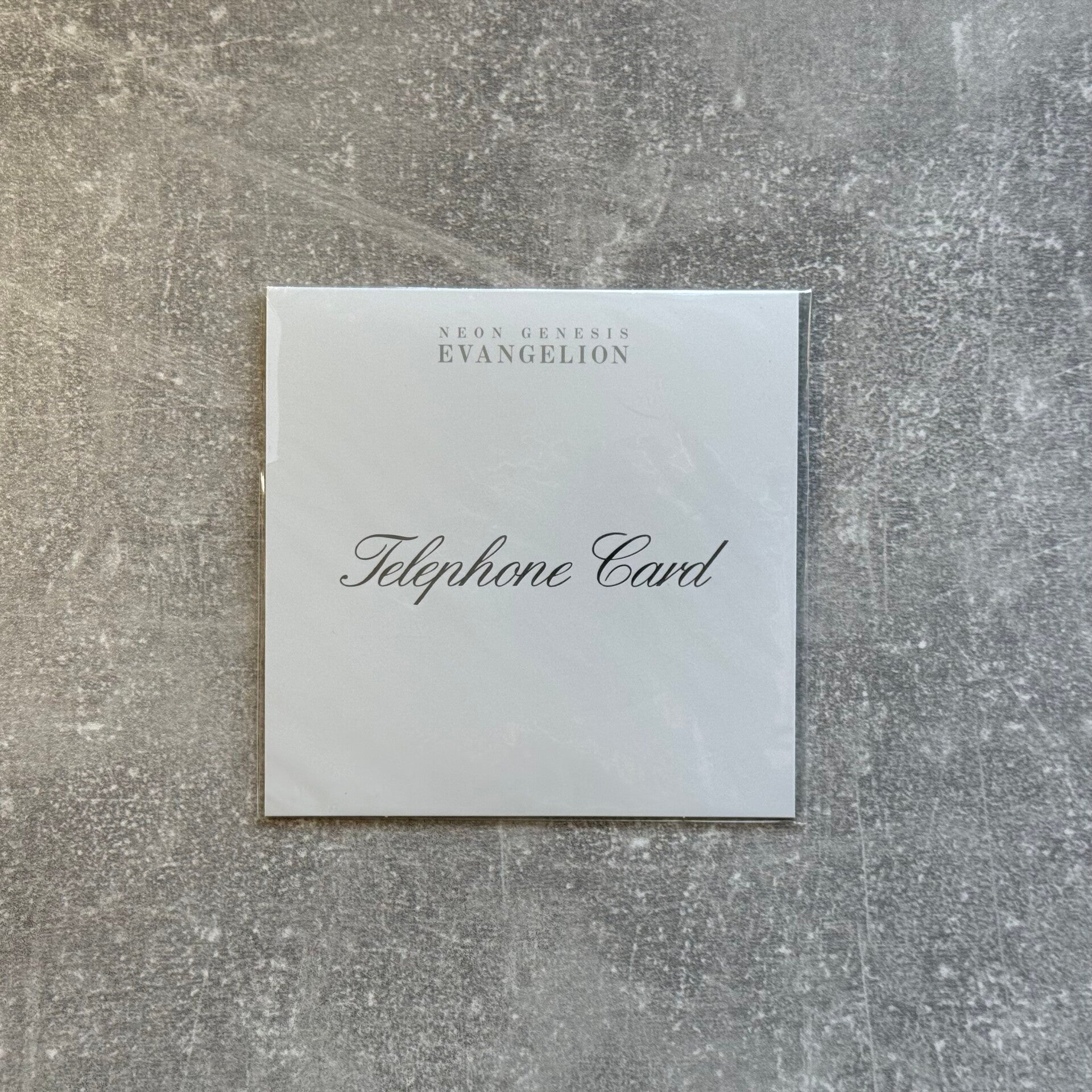
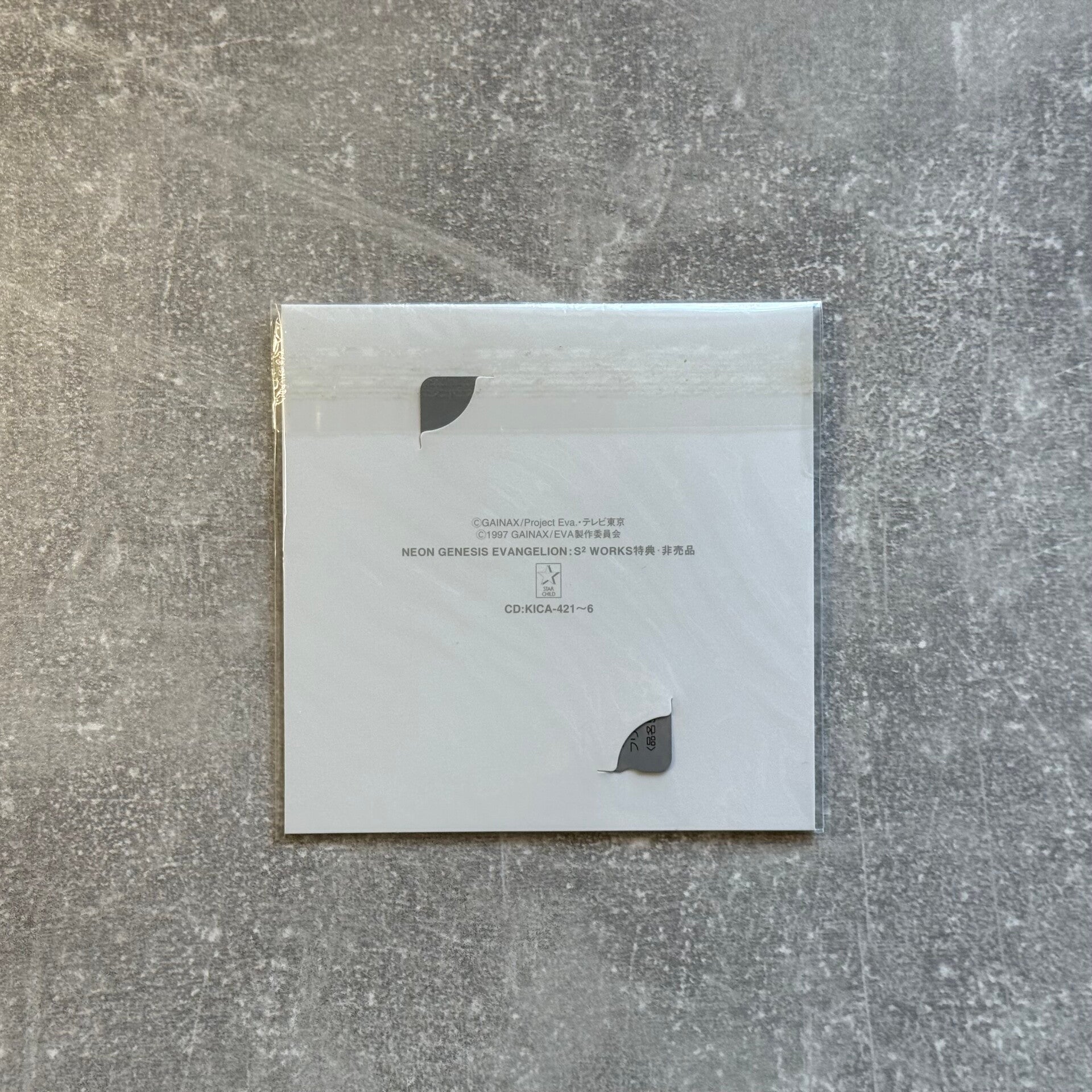
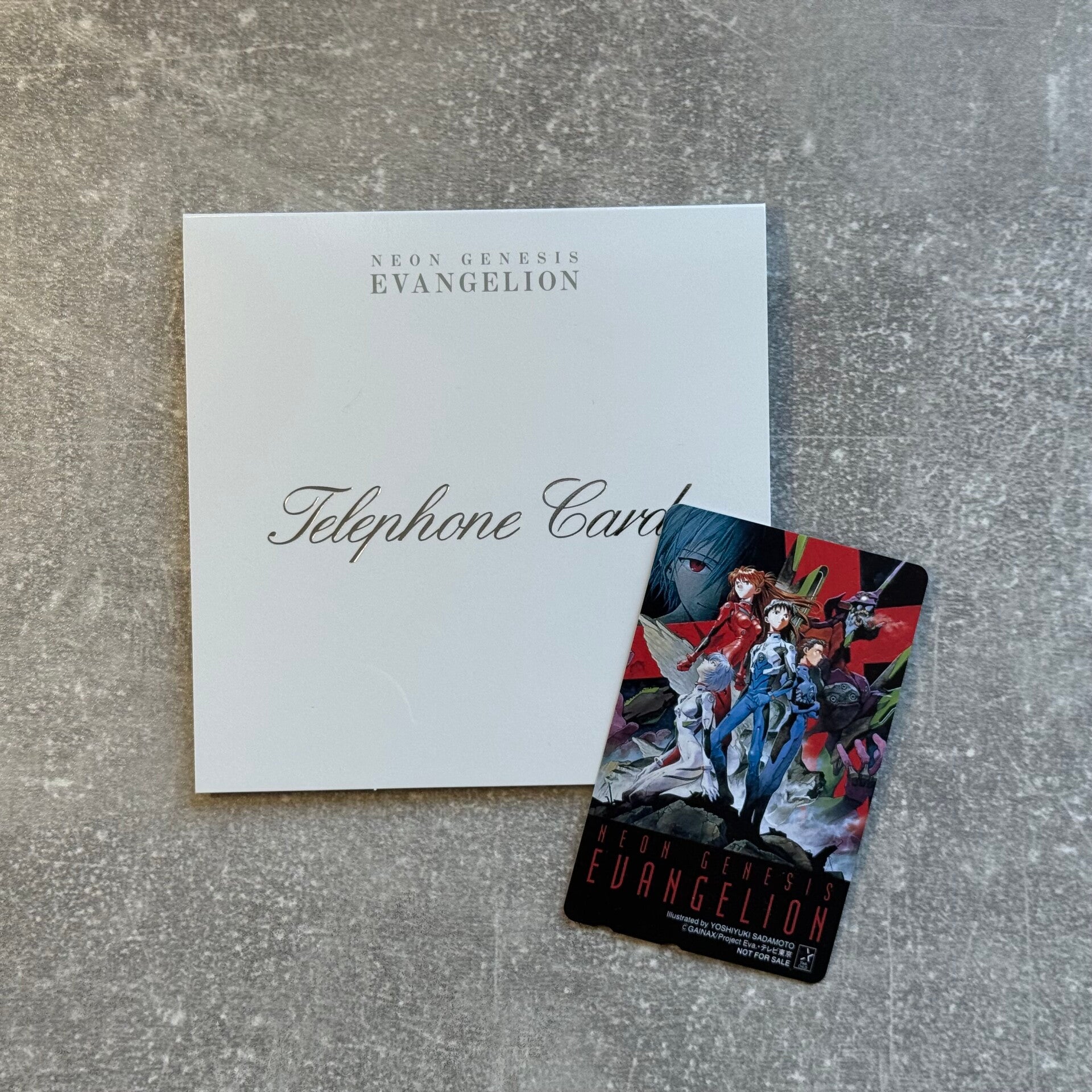
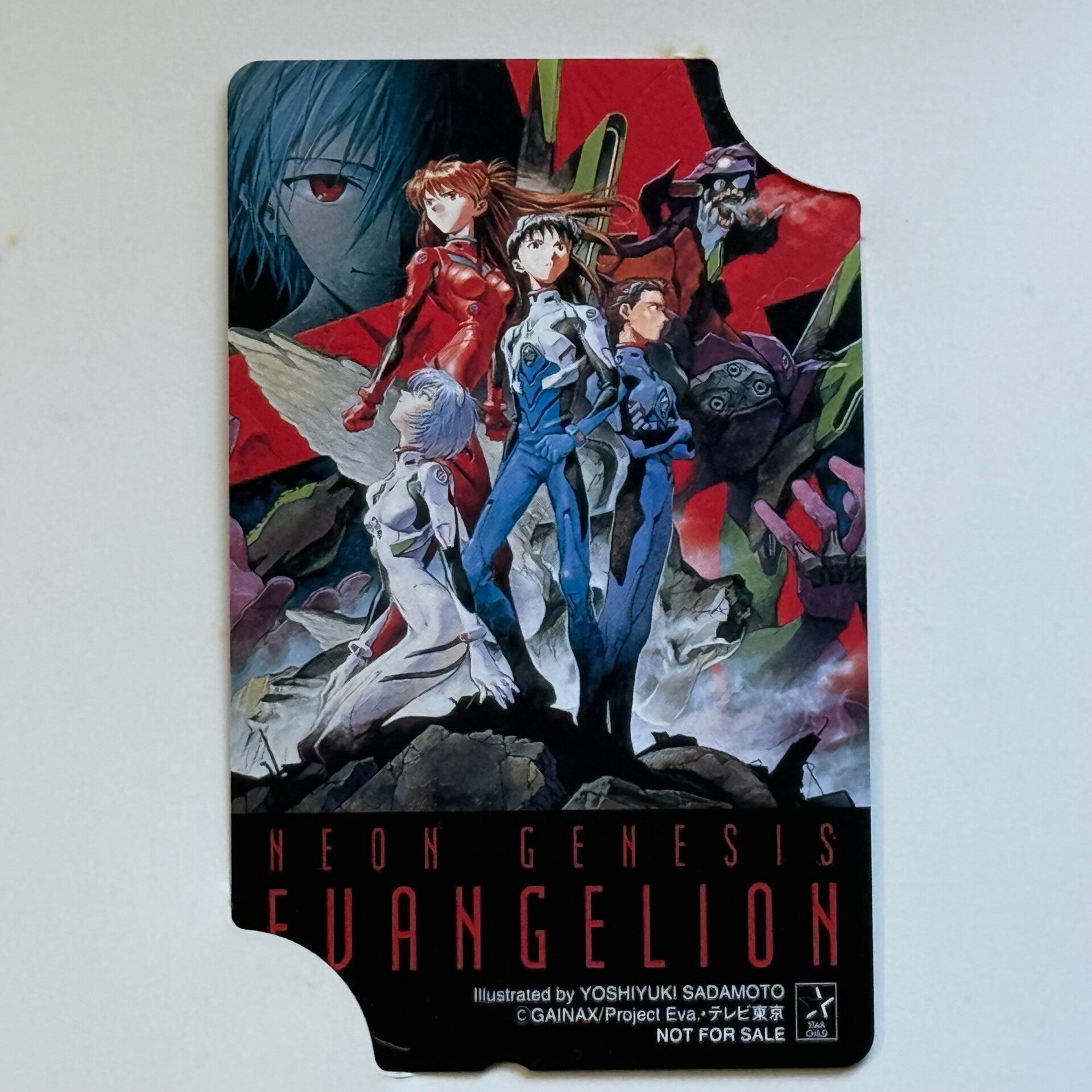
The package also includes an exclusive prepaid Neon Genesis Evangelion telephone card, supplied in its own protective sleeve. Because it is a loose item rather than being fixed inside the packaging, it is one of the components most frequently missing from incomplete sets.
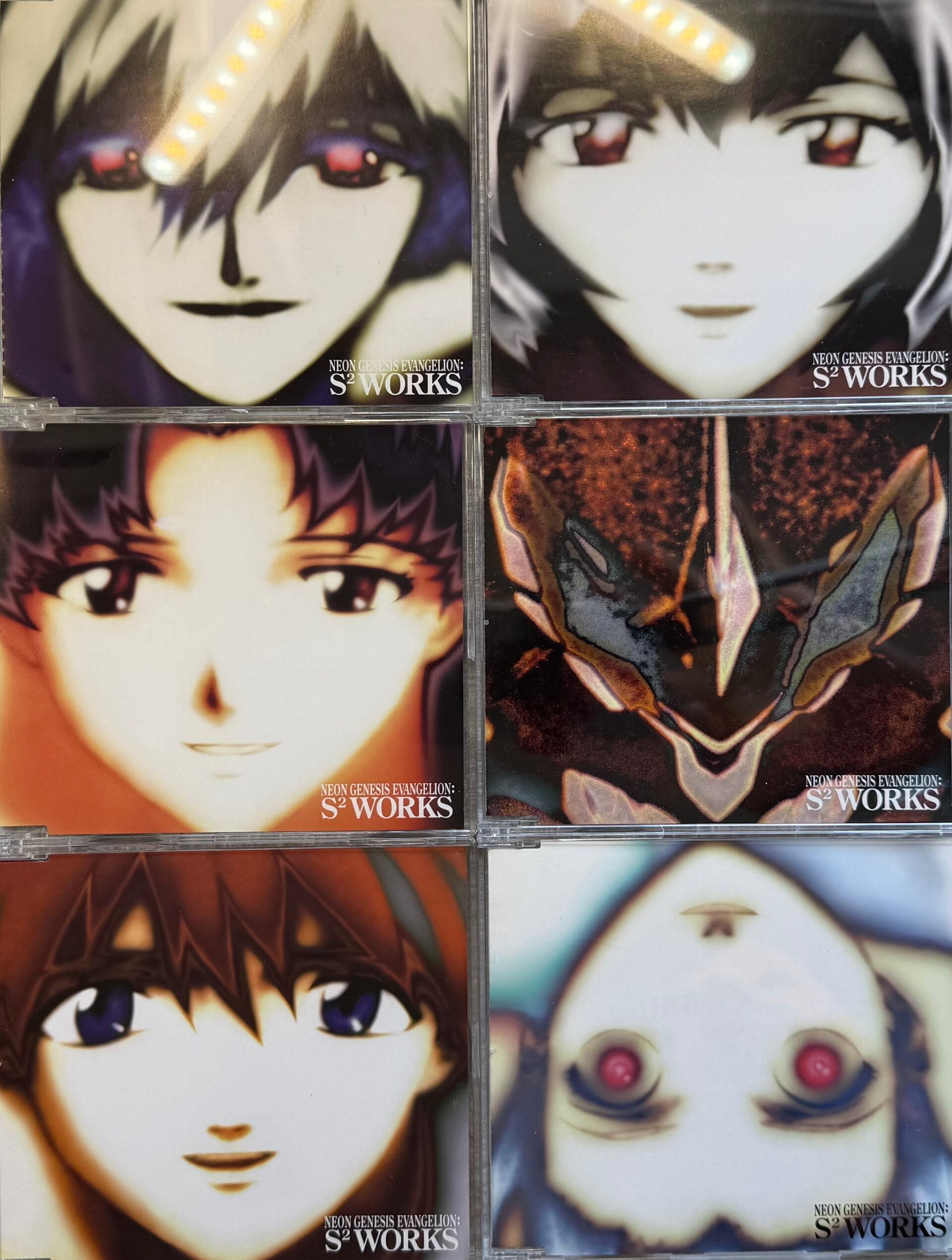
Each soundtrack disc features its own unique colour and artwork, reinforcing the premium presentation of the collection rather than simply reusing a common disc design.
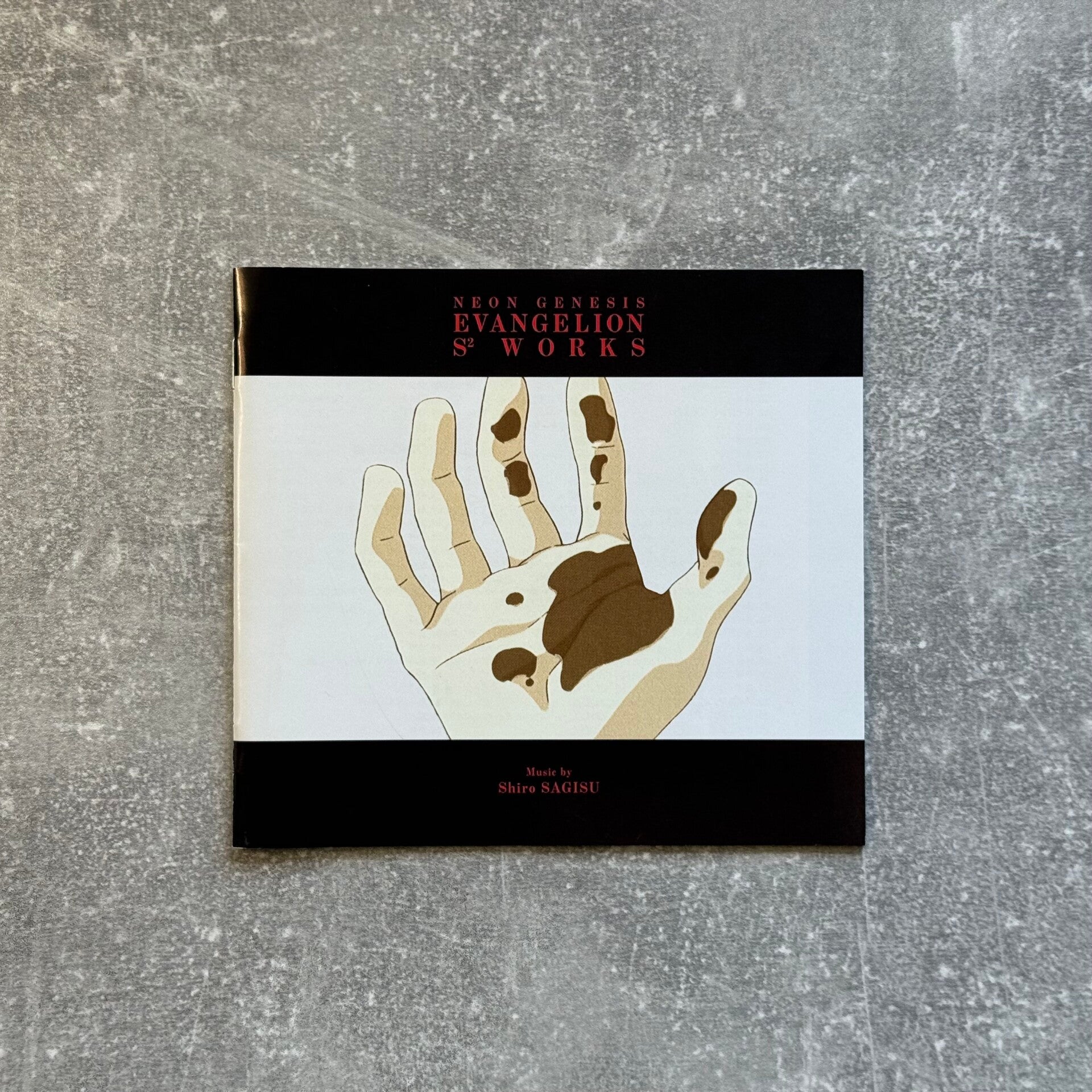
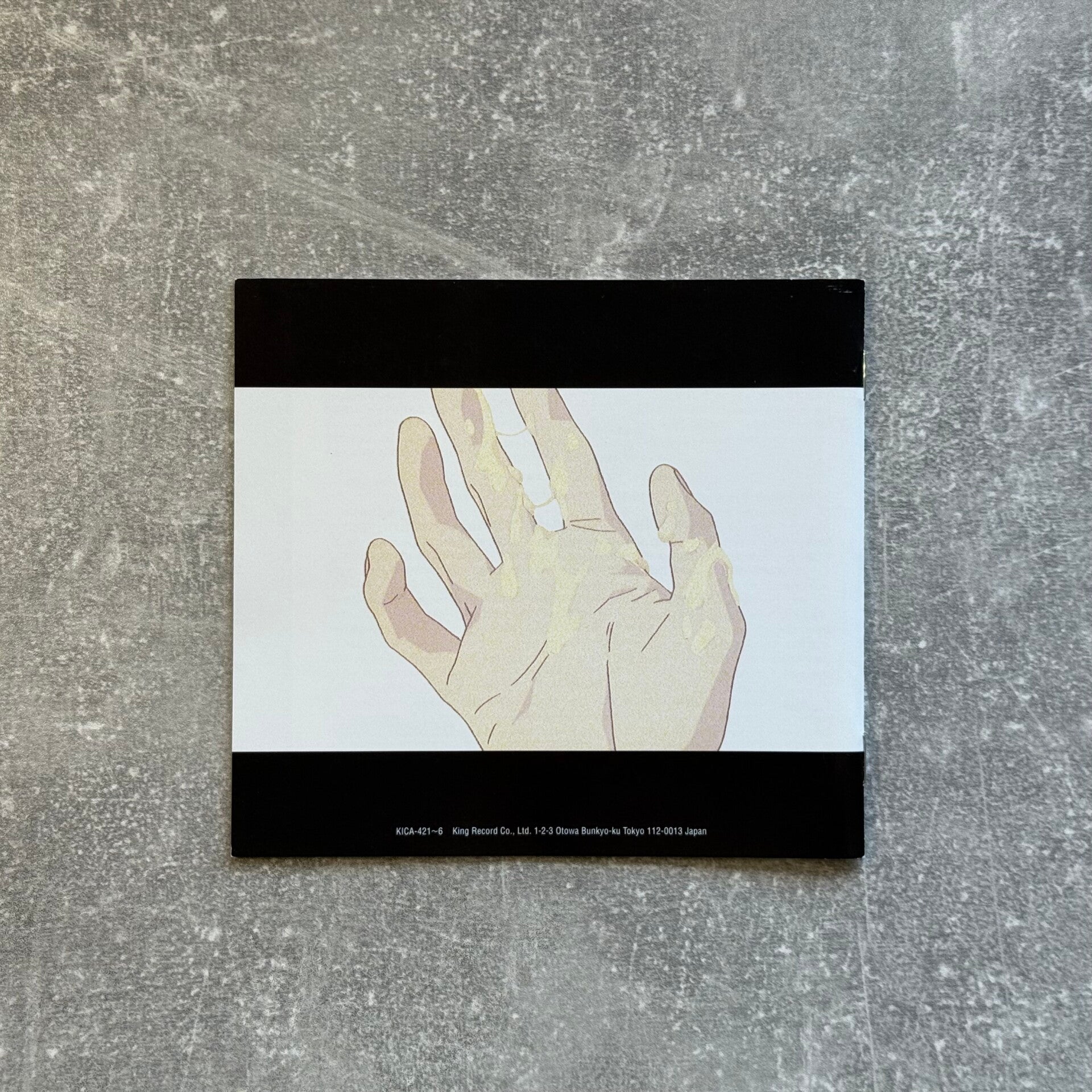
Perhaps the most striking piece of artwork is found on the booklet. One side depicts Shinji Ikari’s blood-covered hand after rescuing Rei Ayanami from Unit-00 during the opening episodes of the television series. Turning the booklet over reveals one of Evangelion’s most infamous visual references: Shinji’s semen-covered hand following the hospital scene in The End of Evangelion. The two illustrations intentionally mirror one another, creating a visual link between one of the earliest and one of the most controversial moments in the franchise.
Why It’s Significant
S² Works represents one of the most ambitious anime soundtrack releases of the 1990s.
Rather than functioning as a simple “greatest hits” album, it preserves the creative process behind Shirō Sagisu’s music by collecting alternate takes, production versions, unused compositions and complete background music that would otherwise have remained scattered across multiple releases or unreleased entirely.
The physical presentation is equally significant. The individually numbered box, exclusive telephone card, bonus disc and carefully designed artwork demonstrate the level of care given to collector-oriented Japanese releases during Evangelion’s original cultural peak.
More than two decades later, it remains one of the definitive archival releases for anyone wishing to study or preserve the music of the original Neon Genesis Evangelion.
Preservation Notes
A complete first Japanese edition should include:
- Outer white slipcase
- Six standard soundtrack CDs (KICA-421~426)
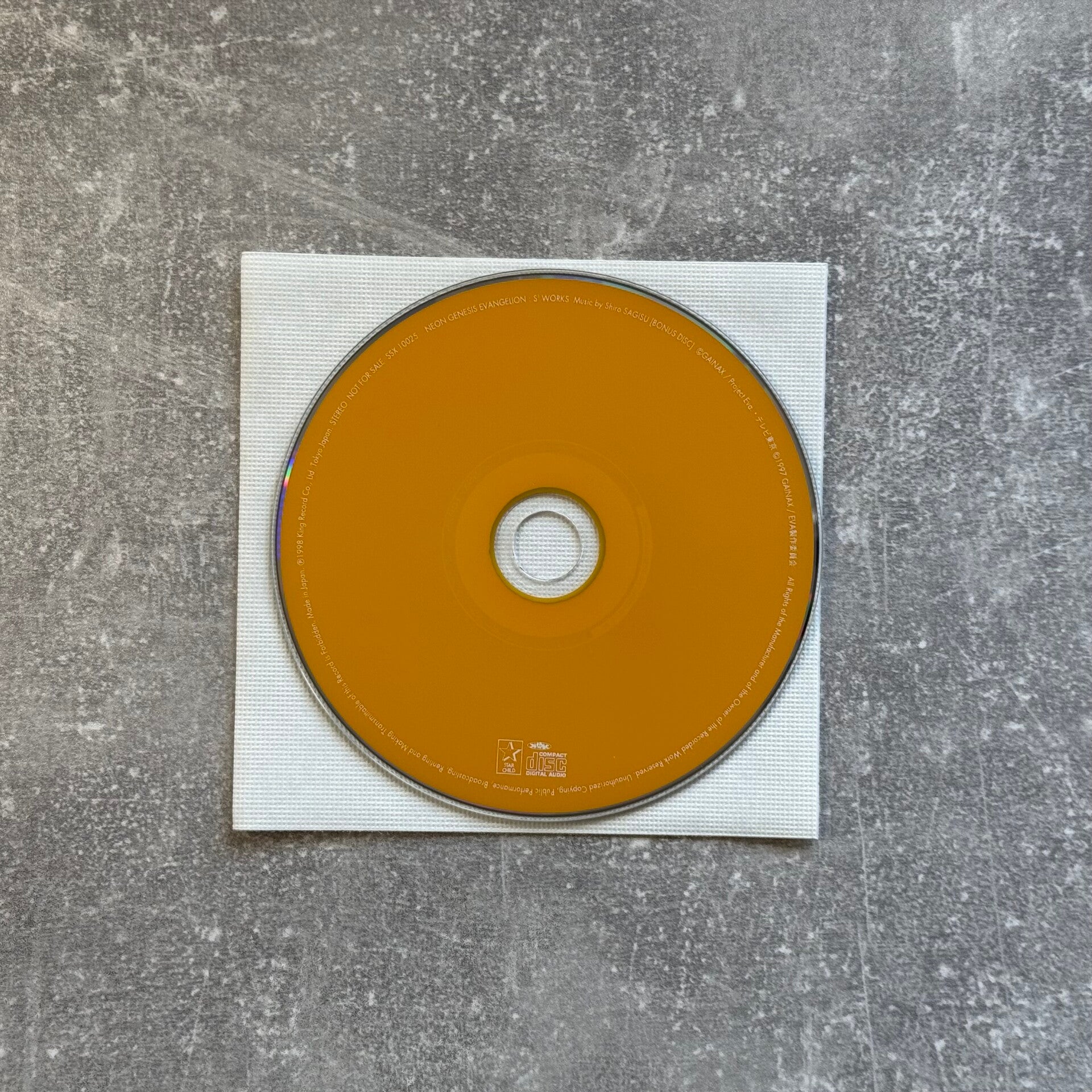
- Gold bonus CD (SSX-10025)
- Booklet
- Telephone card
- Individual serial number on the outer box
The white outer box is particularly susceptible to shelf wear, yellowing and scuffing due to its matte finish.
The telephone card and bonus disc are the components most commonly missing from second-hand copies.
Collectors should also be aware that convincing unauthorised editions exist, particularly Taiwanese counterfeit pressings. These often imitate the appearance of the genuine Japanese release but differ in manufacturing quality, disc printing and packaging details. Genuine first editions are identifiable by their King Records catalogue numbers, individually numbered boxes and high-quality printing throughout.


Trivia & Interesting Facts
- S² references both the fictional S² Engine (Super Solenoid) from Evangelion and composer Shirō Sagisu’s initials.
- The collection contains 225 tracks, making it one of the largest soundtrack releases produced for the original series.
- Every soundtrack disc features completely unique artwork and colour coding.
- The booklet’s front and reverse artwork deliberately juxtapose two of the most memorable hand imagery scenes involving Shinji Ikari, spanning the beginning and end of the original story.
- Despite being released over twenty-five years ago, S² Works remains one of the most comprehensive physical archives of Shirō Sagisu’s work for the original Evangelion.

About the Snows Mini Preservation Project
This item has been documented as part of the Snows Mini Preservation Project, an ongoing effort to preserve and catalogue physical media. Our aim is to record releases, variations and their historical significance for collectors and future enthusiasts. Most items featured in the project form part of our archive and may not be for sale.
More photos
Neon Genesis Evangelion S² Works Limited Box Set no 016062 | 7CD | Japan Import

Released in 1998, Neon Genesis Evangelion S² Works is one of the most comprehensive Evangelion music collections ever produced. Composed by Shiro Sagisu, this premium seven-disc box set compiles the complete background music from the original television series together with Evangelion: Death & Rebirth and The End of Evangelion, including alternate takes, prototype recordings and previously unreleased material unavailable on the earlier soundtrack albums.
Platform:
7CD Box Set (6 main CDs + bonus CD)
Publisher:
King Records (Starchild)
Release:
4 December 1998
Contents:
Original presentation box, six individual CD cases, one bonus CD in paper sleeve, telephone card and original insert. Catalogue number: KICA-421~6. Serial number: 016062.
Collectibility notes:
Regarded as one of the definitive Evangelion soundtrack releases, S² Works contains more than eight hours of music by legendary composer Shiro Sagisu, including unused cues, alternate arrangements, production material and soundtrack variations that were unavailable on the standard soundtrack CDs. The original 1998 release was issued as a numbered limited edition, with each box individually serial numbered, making complete examples especially appealing to Evangelion collectors. It remains one of the franchise’s most significant physical music releases and an important companion to the original television series and The End of Evangelion.
Condition:
Very Good. Well cared for and highly presentable. Items may show minor signs of handling, use, or storage, such as light marks, slight edge wear, minor sun damage, or small imperfections to the packaging or contents. The original contents show age-related wear but it's minimal. Overall, collector grade item.
Disclaimer:
This item has not been tested and is sold as a collectible. Please message us before ordering if you have any questions.
This item is part of our preservation project – click here for details.
Add comment
Comments