


An important pair of early official Hatsune Miku compilations, preserving both the music and fan-created visual culture that defined her formative 2007–2009 period.
Hatsune Miku Best ’07–’09 Memories
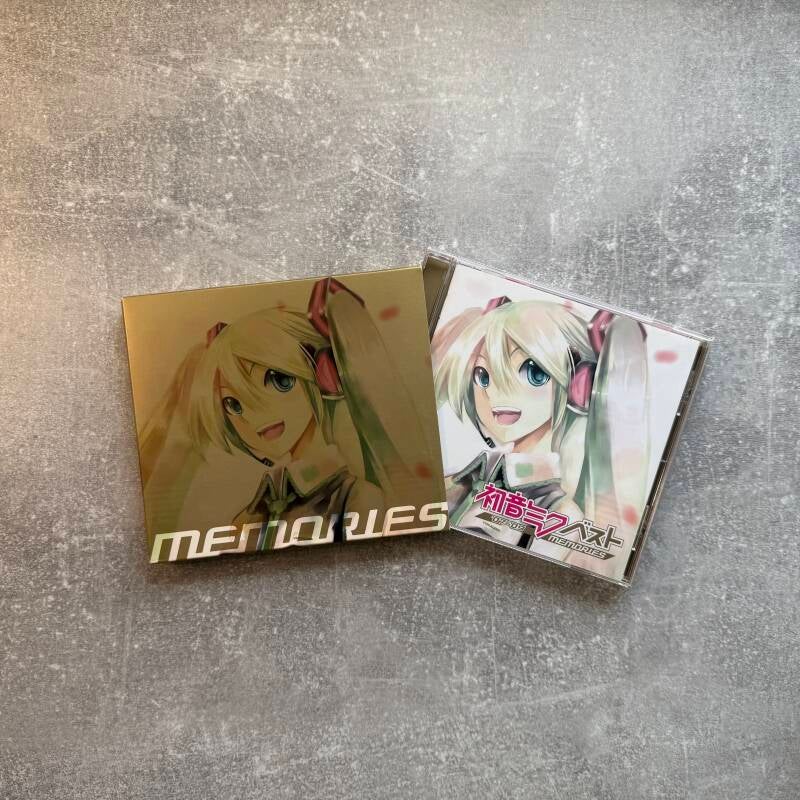
CD | 26 August 2009 | Japan | Sony Music Direct | MHCL-1567 | JAN 4582290351520
17 tracks | First-production edition | KEI-illustrated special slipcase | A2 fold-out poster
Hatsune Miku DVD Memories
DVD-Video | 10 February 2010 | Japan | Sony Music Direct / SOULTAG | MHBL-145 | JAN 4582290353456
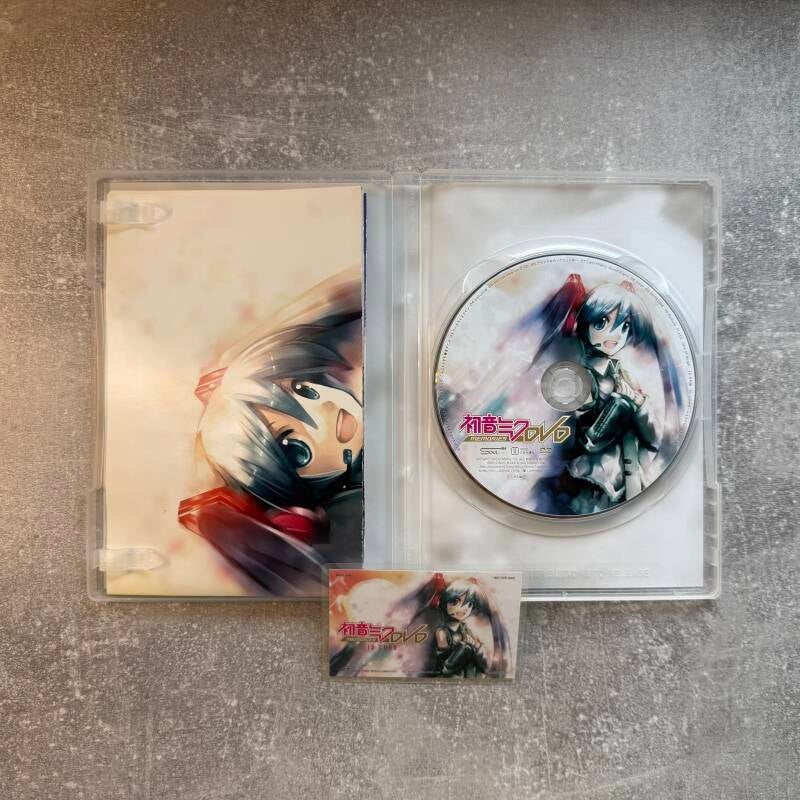
13 music videos / PVs | First-production edition | Special illustrated slipcase | Large double-sided fold-out poster and programme
Together, the releases preserve two sides of Hatsune Miku’s formative 2007–2009 period: the CD collects many of her foundational early songs, while the DVD documents the accompanying PV and visual culture as part of Miku’s first official DVD compilation project.
Summary
Released in August 2009 to coincide closely with the second anniversary of Hatsune Miku’s debut, Hatsune Miku Best ’07–’09 Memories was one of two complementary best albums documenting the extraordinary body of music created during Miku’s first two years. It appeared alongside Hatsune Miku Best ’07–’09 Impacts as a joint project involving Sony Music and Dwango, the company associated with Nico Nico Douga.
Memories contains 17 tracks from creators including supercell, livetune, OSTER project, doriko, baker, Kobayashi Onyx, malo and OneRoom. Many had established themselves through online publishing rather than the conventional recording industry. The compilation therefore captures an important period in which music created using Vocaloid software was moving from Japanese internet culture into mainstream commercial physical releases.
The accompanying Hatsune Miku DVD Memories followed on 10 February 2010, alongside a corresponding DVD Impacts. Rather than simply reproducing the CD programme, the DVD concentrates on the visual side of early Miku culture, presenting 13 music videos and PVs created around notable songs. These include 3D animation, hand-drawn animation and other independently produced visual works.
Together, the two Memories releases preserve complementary aspects of early Vocaloid culture: the CD documents the songs and producers, while the DVD records the illustrators, animators and video creators who helped transform Hatsune Miku from voice-synthesis software into a recognisable virtual performer.


Important Tracks & Videos
Melt – supercell feat. Hatsune Miku
One of the defining works of early Vocaloid music. Written by ryo and originally published online in December 2007, Melt became closely associated with Hatsune Miku’s rapid rise in popularity and helped establish ryo and the creative group supercell.
Its inclusion makes Memories particularly representative of the earliest period in which independently uploaded Miku songs began reaching audiences far beyond the original Vocaloid community.
World is Mine – supercell feat. Hatsune Miku
Another major ryo/supercell composition and one of the most recognisable songs associated with early Hatsune Miku.
Unlike Melt, World is Mine appears on both the Memories CD and DVD, allowing the pair to preserve both the musical work and its visual presentation.
Hajimete no Oto – malo feat. Hatsune Miku
Literally referring to a “first sound”, malo’s Hajimete no Oto became closely associated with the reflective side of early Hatsune Miku music.
Its significance within the Memories project is particularly visible on the DVD, where a 3D PV for the song opens the programme.
Packaged – livetune feat. Hatsune Miku
One of kz/livetune’s foundational Hatsune Miku compositions and an important example of the electronic music that characterised part of the earliest Vocaloid scene.
livetune subsequently became one of the best-known professional acts to emerge from the early Miku creator community.
Saihate – Kobayashi Onyx feat. Hatsune Miku
An important early Miku composition notable for its treatment of death and farewell. Its restrained visual and musical identity stood apart from many of the more overtly character-driven Miku works of the period.
Miracle Paint – OSTER project feat. Hatsune Miku
A prominent early work by OSTER project, one of the producers most closely associated with Vocaloid’s formative years. Its jazz-influenced arrangement also demonstrates how quickly creators began exploring styles beyond straightforward electronic pop with Miku’s voice.
Electric Angel – Yasuo feat. Hatsune Miku
One of the earliest widely recognised original Hatsune Miku songs. The CD contains the original song, while the DVD includes the associated hand-drawn animation credited to Yasuo and Nishikigoi.
celluloid – baker feat. Hatsune Miku
An important early composition by baker that appears on both releases. Its presence illustrates the deliberate overlap between the musical history preserved by the CD and the visual culture documented by the DVD.
from Y to Y – OneRoom feat. Hatsune Miku
One of the best-known early songs by OneRoom, better known as JimmyThumb-P. The ballad became an enduring part of the early Miku repertoire and represents the increasingly sophisticated songwriting appearing within Vocaloid culture by 2009.
Uta ni Katachi wa Nai Keredo – doriko feat. Hatsune Miku
A major early Vocaloid ballad by doriko and another example of Hatsune Miku being used for emotionally driven songwriting rather than primarily as a technological novelty or character.
Black★Rock Shooter – supercell feat. Hatsune Miku
Included on the DVD rather than the Memories CD, Black★Rock Shooter occupies an unusual place in Vocaloid history.
The song by ryo was inspired by an original character created by illustrator huke. The character subsequently developed beyond the Miku song into the independent Black★Rock Shooter multimedia franchise, making the work an especially notable example of the collaborative creative culture surrounding early Vocaloid.
Last Night, Good Night – livetune feat. Hatsune Miku
Another important early livetune work included on the DVD. Its atmospheric presentation demonstrates the range of music and visual styles already associated with Miku only a few years after her introduction.

CD Track List – MHCL-1567
- intro memories – KefiaP feat. Hatsune Miku
- Hajimete no Oto – malo feat. Hatsune Miku
- Melt – supercell feat. Hatsune Miku
- World is Mine – supercell feat. Hatsune Miku
- Miracle Paint – OSTER project feat. Hatsune Miku
- Shiro no Kisetsu – Yuuyu feat. Hatsune Miku
- Saihate – Kobayashi Onyx feat. Hatsune Miku
- Anata no Utahime Complete ver. – azuma feat. Hatsune Miku
- Electric Angel – Yasuo feat. Hatsune Miku
- White Letter – GonGoss feat. Hatsune Miku
- melody… – mikuru396 feat. Hatsune Miku
- Sobakasu – DjonP feat. Hatsune Miku
- celluloid – baker feat. Hatsune Miku
- Packaged – livetune feat. Hatsune Miku
- from Y to Y – OneRoom feat. Hatsune Miku
- Uta ni Katachi wa Nai Keredo – doriko feat. Hatsune Miku
- outro Time Limit -Endless- – North-T feat. Hatsune Miku
The CD runs for approximately 66 minutes.
DVD Programme – MHBL-145
- Hajimete no Oto [3D PV] – malo / puni-ko feat. Hatsune Miku
- Electric Angel – Yasuo / Nishikigoi feat. Hatsune Miku
- World is Mine – supercell feat. Hatsune Miku
- celluloid – baker feat. Hatsune Miku
- melody.exe ver2.00 – Kio-style PV Sound Union feat. Hatsune Miku
- Black★Rock Shooter – supercell feat. Hatsune Miku
- Last Night, Good Night – livetune feat. Hatsune Miku
- Dear – 19’s Sound Factory / Mie no Hito feat. Hatsune Miku
- SETSUNA – SHIKI feat. Hatsune Miku
- Nebula – Tripshots feat. Hatsune Miku
- LOL -lots of laugh- – mikumix feat. Hatsune Miku
- Yuuhizaka – doriko / nezuki feat. Hatsune Miku
- Smiley × Smiley PV ver.1.1+α – GonGoss / Moch feat. Hatsune Miku
The original fold-out poster supplied with the preserved DVD copy doubles as a programme guide. Its reverse presents all 13 videos with individual artwork, creator credits and descriptive text, making the insert part of the documentary content of the release rather than simply a decorative
Release & Version Details
Hatsune Miku Best ’07–’09 Memories – MHCL-1567
Sony Music Direct released Memories in Japan on 26 August 2009. It was accompanied by Hatsune Miku Best ’07–’09 Impacts (MHCL-1568), released through Dwango AG Entertainment.
The two albums were conceived as complementary selections rather than sequential volumes. Contemporary promotional material described Memories as concentrating on particularly memorable and emotionally resonant works, while Impacts focused on songs selected for their immediate impact.
The first-production edition of Memories received four documented bonuses:
- newly illustrated KEI special outer box
- A2 special poster displaying the complete jacket illustration
- KEI-illustrated picture-label CD
- serial number providing access to online video material containing behind-the-scenes comments from participating creators
The preserved copy retains the special outer slipcase and original A2 poster.
KEI’s involvement is particularly appropriate: he created the original character illustration used for Crypton Future Media’s Hatsune Miku software in 2007.
Hatsune Miku DVD Memories – MHBL-145
The DVD followed on 10 February 2010 and was again released alongside a complementary DVD Impacts edition.
The project was promoted at the time as Hatsune Miku’s first DVD collection, selecting popular videos from the enormous body of Miku material circulating through Japanese video-sharing culture.
The first-production specification is documented as including a special case, picture-label disc and serial-number card giving access to footage from MikuFes ’09 (Summer), the live event held on 31 August 2009.
The preserved copy additionally retains its original large fold-out Memories poster. One side carries a full-size Hatsune Miku illustration, while the reverse serves as an illustrated programme guide to the DVD’s 13 videos. The insert itself is explicitly branded Hatsune Miku DVD memories, confirming its association with this release.
The DVD’s original price of ¥3,939 also incorporated a familiar piece of Miku wordplay: 39 can be read as mi-ku through Japanese numerical wordplay and has subsequently become strongly associated with the character.

Why It’s Significant
These releases appeared at a particularly important point in Hatsune Miku’s development.
Crypton Future Media released the original Hatsune Miku software on 31 August 2007. Only two years later, tens of thousands of Miku-related videos had been uploaded to Nico Nico Douga, with the most successful songs accumulating audiences on a scale that could no longer be regarded as a small software enthusiast community.
The Best ’07–’09 albums represented an early large-scale attempt to collect this rapidly developing internet music culture into officially licensed physical releases.
This distinction matters because there was no single conventional recording artist behind Hatsune Miku. Producers independently purchased the software, composed songs and uploaded their work. Illustrators drew new interpretations of the character, while video creators subsequently combined those illustrations and songs into PVs.
The DVD captures this collaborative process particularly well. Credits such as malo / puni-ko, Yasuo / Nishikigoi, 19’s Sound Factory / Mie no Hito and doriko / nezuki visibly acknowledge both musical and visual creators.
The releases therefore preserve more than a selection of popular Hatsune Miku songs. They document a period in which a decentralised internet community was developing new methods of producing, publishing and sharing Japanese music.
The DVD also has particular archival value because much of early Vocaloid culture was inherently dependent on websites. Physical publication provided a fixed version of videos that had originally circulated within a constantly changing online environment.

Preservation Notes
For MHCL-1567, the first-production package is substantially more elaborate than the standard CD alone. The KEI outer box, A2 poster and picture-label disc are important identifiers, while the original serial-number insert represents a now-obsolete online component of the release.
The A2 poster was factory-folded. Original fold lines are therefore an inherent feature rather than evidence that a poster has necessarily been mishandled.
The illustrated card outer packaging on both releases is more vulnerable to rubbing, edge wear, crushing and fading than the plastic cases and discs it protects. Copies should ideally be stored away from direct sunlight and excessive pressure.
The large DVD insert deserves particular care. In addition to its full-size Miku artwork, its reverse contains the illustrated 13-video programme. Damage or loss therefore removes information as well as an original packaging component.
The serial-number bonuses associated with these releases also illustrate a preservation problem increasingly encountered with physical media from the late 2000s onwards. The cards themselves can survive indefinitely, while the websites and online material they were designed to unlock may not.
Complete copies retaining these ephemeral components provide a more accurate record of how the releases were originally presented to buyers.
Trivia & Interesting Facts
Hatsune Miku Best ’07–’09 Memories was released on 26 August 2009, only five days before Hatsune Miku’s second anniversary.
The CD contains 17 tracks and runs for approximately 65 minutes and 46 seconds.
Memories and Impacts were simultaneous companion albums produced through collaboration between Sony Music and Dwango rather than one being a sequel to the other.
The first-production CD artwork and picture label were created by KEI, Hatsune Miku’s original character illustrator.
The CD’s selection includes several songs that remain strongly associated with the earliest generation of Vocaloid music, including Melt, World is Mine, Packaged, Saihate, Electric Angel and Hajimete no Oto.
The DVD reached No. 6 on Oricon’s weekly DVD ranking and remained ranked for five weeks.
The DVD’s programme demonstrates how quickly Vocaloid visual production had developed. Within a single collection it includes hand-drawn animation, 3D animation and other forms of independently created PV.
The presence of Black★Rock Shooter is particularly notable because the work subsequently developed into a separate multimedia franchise, despite originating from the creative circle surrounding an early Hatsune Miku song.
The DVD’s original ¥3,939 price incorporates the number 39, widely used as Hatsune Miku wordplay.
The surviving posters provide an unusually effective visual connection between the two releases: both use large Hatsune Miku illustrations while retaining their respective Memories CD and DVD branding.
About the Snows Mini Preservation Project
This item has been documented as part of the Snows Mini Preservation Project, an ongoing effort to preserve and catalogue physical media. Our aim is to record releases, variations and their historical significance for collectors and future enthusiasts. Most items featured in the project form part of our archive and may not be for sale.
Download
-
 Example product £14.45
 -
Example product £14.45
-
Example product £14.45
-
Example product £14.45
Add comment
Comments